
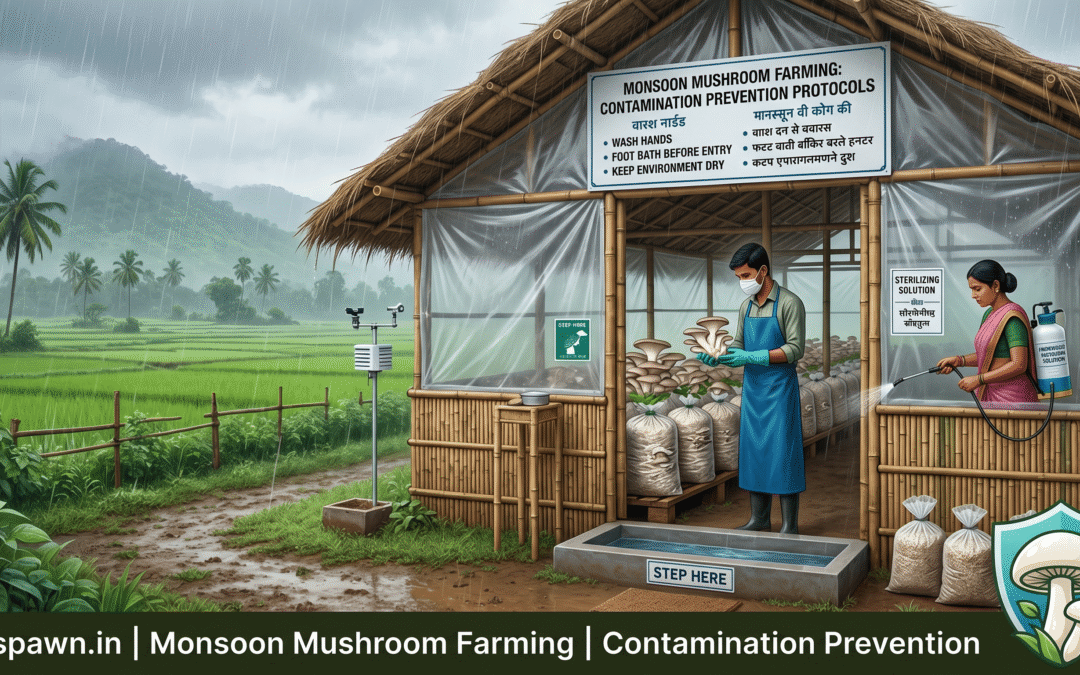
The monsoon season is one of the best times to grow mushrooms in India — but it is also the easiest time to lose an entire batch. High humidity, poor ventilation, and inconsistent hygiene can turn a promising crop into a contamination problem within days. For home growers and small farmers, the difference between profit and failure in monsoon usually comes down to one thing: process.
If you are planning to grow oyster, milky, or other gourmet mushrooms during the rainy season, this guide will help you manage the environment, protect your bags, and improve your harvest quality without making the setup too expensive or complicated.
Why monsoon is good for mushroom farming
Mushrooms thrive in humid conditions, which makes the rainy season naturally favorable for cultivation. In many parts of India, monsoon weather reduces the need for frequent misting and helps maintain the moisture levels needed for healthy fruiting.
For growers working from balconies, spare rooms, sheds, or low-cost grow spaces, this can reduce setup costs and make seasonal production easier to manage. Oyster mushrooms in particular are popular because they grow fast, adapt well, and can give early harvests under proper conditions.
The biggest monsoon risk: contamination
The same humidity that helps mushrooms grow also creates an ideal environment for unwanted molds and bacteria. If your substrate is not properly pasteurized, your room has stale air, or your spawn is weak, contamination spreads quickly and reduces yield.
Common warning signs include green mold, black patches, sour smell, slimy substrate, or unusually slow colonization. Healthy spawn should look bright white, smell earthy, and colonize the substrate evenly rather than showing patchy or discolored growth.
5 ways to reduce contamination in monsoon
-
Use fresh, high-quality spawn from a reliable lab source; poor spawn is one of the main reasons beginners fail.
-
Pasteurize or sterilize substrate properly before inoculation, because untreated substrate gives competing organisms an easy start.
-
Keep the grow room clean, dry on the floor level, and free from stagnant water.
-
Improve fresh air exchange with windows, vents, or a small fan, because excess CO2 and stale moisture can deform mushrooms and increase disease pressure.
-
Avoid over-misting; humidity is important, but waterlogged bags and wet surfaces encourage rot and bacterial issues.
Best monsoon conditions for growers
During spawn run, the substrate should stay clean, stable, and relatively undisturbed while mycelium colonizes the bag. A controlled environment with steady temperature and limited fluctuation helps prevent premature fruiting and supports stronger colonization.
Once fruiting begins, maintain high humidity with indirect light and regular fresh air exchange rather than constant spraying. In practical terms, growers should focus less on “making it wetter” and more on balancing humidity with ventilation.
Which mushrooms perform well in the rainy season
For most beginners, oyster mushrooms remain the easiest monsoon crop because they are fast, forgiving, and widely accepted in the market. Your existing site content also positions oyster mushrooms as a beginner-friendly option with quick returns and broad adaptability.
Milky mushrooms can also be a strong option in warmer regions, while specialty oysters may help growers target premium restaurant and urban retail demand. Choosing the right variety should depend on local temperature, buyer demand, and your ability to maintain a clean setup.
How to make monsoon farming profitable
Monsoon can improve productivity if you keep contamination low and rotate batches consistently. Small growers can sell through local vegetable vendors, restaurants, organic stores, and direct community channels, which are already highlighted across your recent posts as realistic sales routes in India.
The simplest profit strategy is to start small, master one variety, and use reliable spawn every cycle. When contamination drops and flush consistency improves, even a compact home setup becomes easier to scale.
Conclusion
Monsoon mushroom farming is not difficult — but it punishes sloppy process. If you control hygiene, use strong spawn, balance humidity with ventilation, and monitor bags daily, the rainy season can become your most productive cultivation window of the year.
At Milkyway Mushroom, we provide laboratory-grade mushroom spawn designed for high yield, strong colonization, and lower contamination risk for both home growers and commercial cultivators across India.