
Every mushroom grower knows the stomach-dropping feeling of opening a cropping room to find green mold or uncolonized patches in the beds.
Substrate contamination is the single largest cause of financial loss in mushroom farming across India. While growers often blame the compost or casing soil, the true root cause often traces back to one critical element: spawn quality and inoculation practices.
Here is how high-quality spawn acts as your first line of defense against crop failure, and how to protect your yield from green mold (Trichoderma), cobweb mold, and bacterial blotch.
1. The Race for Substrate Dominance
Mushroom substrate (whether wheat straw, paddy straw, or composted bagasse) is rich in nutrients. This makes it a target not just for your mushroom mycelium, but for billions of wild fungal spores and bacteria present in the environment.
-
Fast Colonization Wins: High-vigour spawn colonizes the substrate rapidly. By running through the bed quickly, the mycelium locks down the nutrient sources and physically blocks competitor molds from taking root.
-
Weak or Aged Spawn Lags: If spawn is old, heat-damaged, or raised from weak strains, mycelial growth slows down. Every extra day your substrate takes to run is an open window for contamination to settle in.
Key Rule: Clean, laboratory-isolated mother cultures ensure your spawn has maximum genetic vigor right out of the bag.
2. Top 3 Signs Your Spawn Might Be Compromised
Before mixing spawn into your compost or bags, perform a quick visual and smell check:
| Visual / Sensory Sign | What It Indicates | Action Required |
| Sour, fermented, or sweet alcohol smell | Bacterial contamination (Bacillus species) | Discard immediately; do not spawn. |
| Yellowish droplets (exudates) on grains | Mycelial stress or aging spawn | Spawn quickly if mild, but avoid long storage. |
| Green, black, or pink spots inside the bag | Mold contamination (Trichoderma, Aspergillus) | Do not open in the spawning area; burn or dump away from the farm. |
3. Best Practices During Spawning (Preventing Human Error)
Even ISO-grade, lab-tested spawn can become contaminated if handled poorly during spawning. Follow these operational rules on the farm:
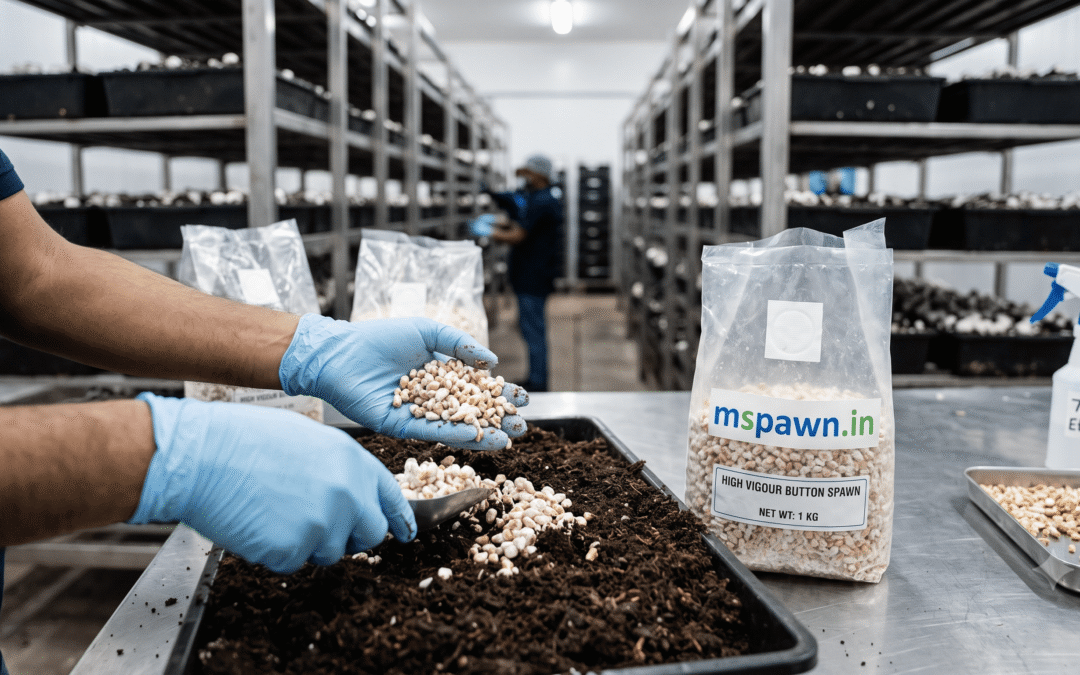
- Disinfect Spawning Tools & Hands: Clean all trays, boards, and hands with a 70% alcohol solution or a mild formalin/sanitizer wash before breaking open spawn bags.
- Temperature Control at Inoculation: Never mix spawn into compost or straw that is above 28°C. High core temperatures will kill or weaken the delicate mycelium while favoring heat-tolerant molds.
- Store Smart: If spawn bags arrive before your substrate is ready, keep them in a clean cold-storage setup at 2°C–4°C (for Button) or cool room temperature (for Oyster/Milky) to pause growth without killing the strain.
The Bottom Line
Preventing contamination isn’t just about farm hygiene—it begins with consistent, high-purity planting material. Investing in lab-tested, lab-controlled mushroom spawn protects your labor, your compost costs, and your final market price.
Need high-vigour Button, Oyster, or Milky Mushroom spawn for your farm?
Explore our ISO-certified strain range on