
If you have been searching online for mushroom spawn in India, you already know the problem: the options are overwhelming, the quality varies wildly, and one wrong purchase can ruin an entire batch.
Whether you are a first-time home grower or scaling up a small mushroom farm, choosing the right spawn supplier is the single most important decision you will make. This guide breaks down exactly what to look for, what to avoid, and where the best spawn in India actually comes from.
Why Your Spawn Source Matters More Than Anything Else
New growers often blame humidity, temperature, or their substrate when their first flush fails. But experienced cultivators know the real culprit in most failed bags is the spawn itself.
Low-quality spawn has three major problems:
- Weak mycelium genetics that colonize slowly, giving contaminants time to take hold
- Contaminated grain from non-sterile production environments, which spreads mold across your entire substrate
- Old or improperly stored stock that has lost viability before it even reaches you
Premium laboratory-grade spawn, on the other hand, colonizes aggressively, crowds out contamination naturally, and delivers dense, consistent flushes batch after batch.
What to Look for in a Spawn Supplier
Before you place an order anywhere, run through this checklist:
1. Sterile Lab Production Environment
Any serious spawn supplier produces in a certified clean-room or laminar flow environment. This eliminates airborne contamination during inoculation. If a supplier cannot tell you about their production conditions, walk away.
2. Documented Strain Genetics
Every spawn bag should correspond to a known, documented mushroom strain with predictable yield data. Vague labels like “mixed oyster” or “local variety” are a red flag. You should know exactly what you are growing.
3. Short Time-to-Delivery
Spawn is a living product. It has a shelf life. The longer it sits in transit or storage, the weaker it becomes. Prioritize suppliers who can ship to you quickly and who use proper cold-chain packaging.
4. Post-Purchase Support
A supplier who disappears after the sale is not a partner — they are a vendor. Look for suppliers who offer cultivation guidance, respond to queries, and stand behind their product quality.
Key Insight: The price difference between cheap spawn and premium spawn is usually ₹100–₹300 per batch. The yield difference can be 3–5x. It is never worth cutting corners on spawn.
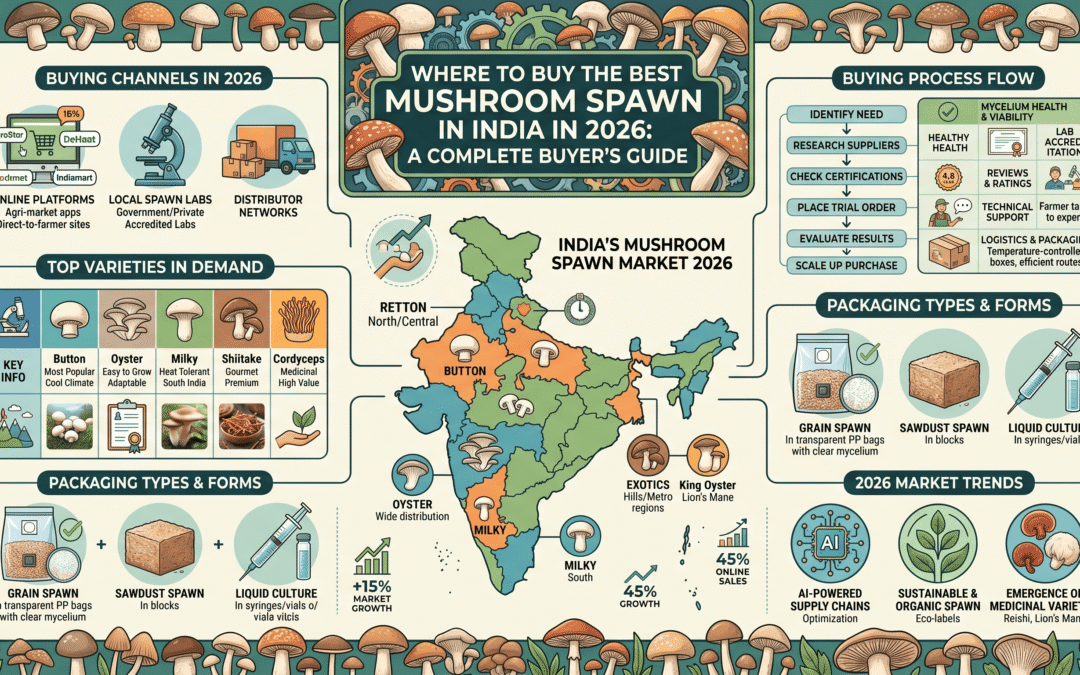
The Most Popular Mushroom Varieties Available in India
Here is what growers across India are currently cultivating most successfully:
- Oyster Mushrooms (Pleurotus species) — The most beginner-friendly variety. Grows fast, yields heavily, and sells well at local markets. Available in Pink, Pearl/Blue, and Golden varieties.
- Milky Mushroom (Calocybe indica) — A tropical variety perfect for Indian summers. Grows at higher temperatures (25–35°C), making it ideal for growing year-round in warmer states.
- Shiitake (Lentinula edodes) — Premium gourmet variety with strong demand from restaurants and health food buyers. Requires sawdust substrate and slightly more experience.
- Button Mushroom (Agaricus bisporus) — Huge retail demand. Requires composted substrate and cooler growing conditions (15–20°C), making it ideal for North Indian winters.
How Much Spawn Do You Actually Need?
A common mistake new growers make is over-ordering or under-ordering spawn. Here is a simple reference:
- Home grower (5–10 bags): 500g–1kg of grain spawn is sufficient
- Small-scale setup (25–50 bags): 2–5kg per production cycle
- Commercial unit (100+ bags): 8–12kg per cycle, ideally ordered fresh for each batch
Never stockpile spawn beyond 4–6 weeks from production date. Even under refrigeration, viability drops significantly after this window.
Why Growers Across India Trust Milkyway Mushroom
At Milkyway Mushroom (mspawn.in), every batch of spawn is produced under strict laboratory conditions using documented, high-yielding strain genetics. We supply grain spawn for Oyster, Milky, Shiitake, and specialty varieties — trusted by home growers, small farms, and commercial cultivators across India.
- Lab-certified, contamination-free production
- Fast dispatch with proper packaging to preserve viability in transit
- Expert cultivation support available for every order
- Consistent, documented strain genetics for predictable results
If you are serious about growing, start with spawn you can trust. Visit mspawn.in to explore our full range and place your order today.
The Big Three: Best Gourmet Varieties for Beginners
If you’re ready to clear a small corner in your home or setup a small-scale cultivation space, these are the varieties trending right now:
1. Pink Oyster (Pleurotus djamor)
-
The Look: Striking, vibrant pink clusters that look like coral reef formations.
-
The Flavor: Subtly woody with a distinct aroma that many compare to bacon or seafood when fried crisp.
-
Why Grow It: It absolutely thrives in warmer tropical temperatures, making it incredibly resilient and fast-growing.
2. Blue/Pearl Oyster (Pleurotus ostreatus)
-
The Look: Gorgeous, dense caps ranging from deep slate blue to soft silver-grey.
-
The Flavor: Mild, sweet, and slightly nut-like. It’s the ultimate all-rounder for stir-fries and pastas.
-
Why Grow It: It loves cooler ambient temperatures and produces massive, heavy flushes.
3. Golden Oyster (Pleurotus citrinopileatus)
-
The Look: Brilliant, sun-yellow, delicate caps.
-
The Flavor: Intensely nutty and aromatic when cooked.
-
Why Grow It: It is a aggressive colonizer, meaning it tears through substrate quickly, leaving less room for contamination.
2. The Secret to a Massive Harvest: It’s All in the Spawn
When people fail at growing mushrooms, they usually blame the humidity or temperature. But more often than not, the culprit is weak or contaminated spawn.
Think of mushroom spawn as your seeds. If you start with generic, low-vitality genetics, your yields will be small, slow, and prone to contamination. High-quality, laboratory-grade grain spawn acts like a supercharged engine for your substrate (whether you are using straw, sawdust, or agricultural waste).
Cultivation Tip: Oyster mushrooms are incredibly aggressive. When introduced to premium grain spawn, the mycelium—the root-like network of the fungus—will rapidly take over the bag, giving you your first flush of gourmet mushrooms in as little as 14 to 21 days.
3. Ready to Start Your Flush?
Whether you’re looking to cultivate a few bags for your kitchen table or setting up a local commercial supply, the journey begins with clean, potent genetics.
At Milkyway Mushroom (mspawn.in), we supply premium, high-yielding mushroom spawn cultivated under strict laboratory conditions to ensure maximum bio-efficiency and contamination-free growth.